Sixtysomething Season 3, Episode 3 - Mark Died & I Don't Know What to Do
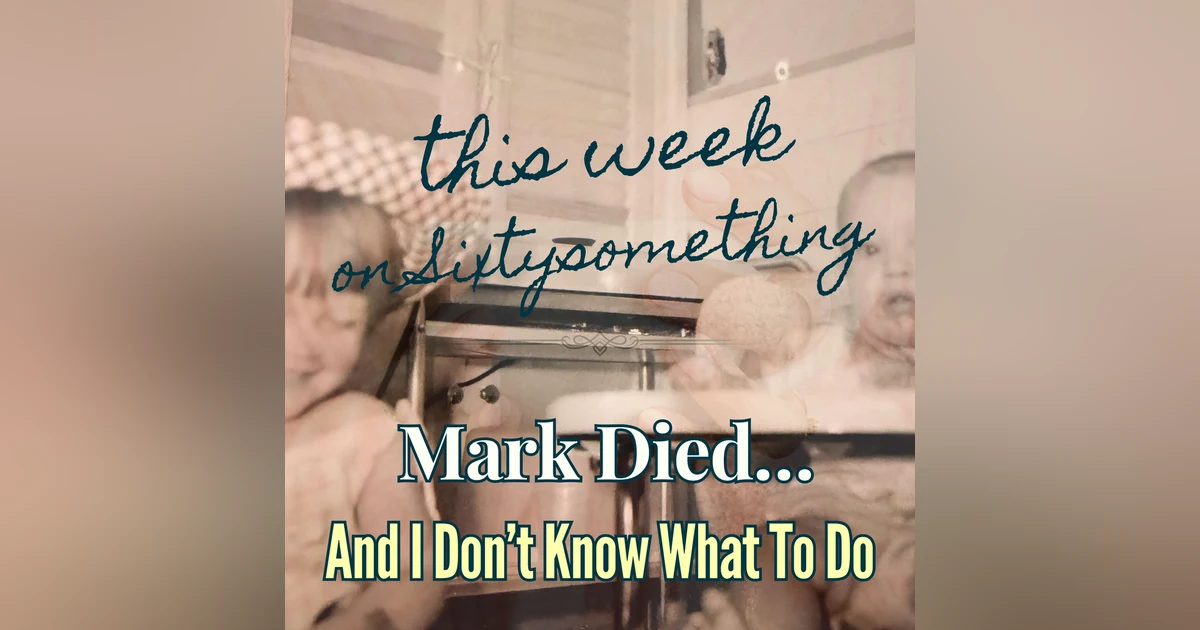
Sixtysomething Season 3, Episode 3 - Mark Died & I Don't Know What to Do
In this episode of Sixtysomething, your host, Grace Taylor Segal, shares this deeply personal story of recently losing her younger brother, Mark, at age 66—and the unexpected emotions that followed. Instead of overwhelming sadness, she found herself living with unanswered questions, complicated memories, unresolved feelings, and a surprising emotional numbness.
This isn't an episode about having the perfect ending or finding easy closure. It's about the reality of loving someone with whom you've shared both joy and pain. It's about family relationships that never fit neatly into a box, the difficult conversations that never happened, and learning that grief isn't always what we expect.
If you've ever lost someone with whom your relationship was complicated—or if you've wondered whether you're grieving "the right way"—this conversation is for you.
Sometimes simply knowing you're not alone is enough.
* * * * * * * * * * * * * * * * * * * * * * * * * * * * * * * * * * *
In This Episode
- Why grief doesn't always look the way we expect
- Losing a sibling after a lifetime of shared history
- The challenge of saying goodbye when relationships are complicated
- Why death doesn't magically erase old hurts
- The "loss inside the loss" when closure never comes
- Feeling numb instead of devastated
- How family members can mourn the same person in very different ways
- Learning to remember someone as their whole, imperfect self
- Finding peace without getting all the answers
* * * * * * * * * * * * * * * * * * * * * * * * * * * * * * * * * * *
Hey Friends! It's me, Grace! I just want to thank you for listening. I hope you’ll let me know what you think about the podcast and if any particular episodes resonate with you.
Listed just below here is my contact information and all of the social channels where you can find me, as well as the link to our Facebook Group.
Contact Info
Grace Taylor Segal
Email: grace@gracetaylorsegal.com
Facebook: 60something Page
(https://www.facebook.com/profile.php?id=61553062496332)
Instagram: @60somethingpod
Facebook Group: 60Something Pod
https://www.facebook.com/groups/1665326354000332
RESOURCES
The poem "Death Is Nothing at All" by Henry Scott Holland
Credits
Sixtysomething Theme Song
Music & lyrics by Lizzy Sanford
Vocals by Lizzy Sanford
Guitar: Lizzy & Coco Sanford
To Leave a Review:
On Apple Podcasts (no link is available--here are the steps)
- Open the Apple Podcasts app.
- Search for the podcast you want to review.
- Select the podcast show page (not an individual episode).
- Scroll to the bottom of the page.
- Click "Write a Review".
On the Sixtysomething Podcast Website
https://www.sixtysomething.net/reviews/new/
Thank you so much for taking the time to review the show!
Timestamps:
00:00 Introduction: Why this episode was so hard to record
01:00 My brother Mark's death and why grief surprised me
03:00 Mark as a child: The brother I grew up with
05:00 Our adult relationship and his health struggles
09:00 The devastating diagnosis: Six months to two years to live
11:00 The emergency call and rushing to Tennessee
13:00 A miraculous improvement—and one last conversation
16:00 "I want to tell you goodbye."
19:00 Our complicated relationship
23:00 The loss inside the loss: When there isn't closure
25:00 Mark's final hours
26:00 Waiting for grief that never came
29:00 When grief doesn't look like grief
30:00 Mourning someone different than everyone else knew
33:00 How do you make peace with someone who's gone?
34:00 Remembering the whole person—not just the good
36:00 Finding peace after goodbye
37:00 What I've learned about complicated grief
39:00 "Death Is Nothing at All"
41:00 Final thoughts and invitation to connect
Mark 1
[00:00:00] Hi, everybody. I'm Grace. I'm so glad you're here. Well, I did it again. I chose a subject for my next episode, this episode, in fact, that was so complicated for me that I started procrastinating again. And yes, that's why it's been a bit of a wait to get to this episode, and I think you'll understand. But here we go.
My younger brother by one year, Mark, died in February. He was 66 years old. He was just one... 18 months, to be precise [00:01:00] younger than I am. We have, Mark and I have a younger brother by another year, one year younger than Mark, and his name is Scott, and he will be in this story that I'm gonna tell you. So I've just been trying to figure out How to feel about this whole situation because I don't feel a lot.
I mean, I'm sad of course, but the tsunami that I've felt in the past about my father dying especially, because that was a premature sudden death, and my mother's death to a [00:02:00] more limited degree. I was sad, but she had lived out her life and she was really so ready to go. So anyway, I've been trying to figure this out and wrap my mind around it, and how to comfort my cracked up heart about it ever since it happened.
And I, I'm not even close to figuring it out, but I guess that's one of the points that I want to make in this episode One of the reasons I want to explore this here with you, because if you're in your 60s, you've probably already lost someone, or you, you're going to. And nobody really [00:03:00] prepares you for how strange it is and how it doesn't always affect you the way you expect it will.
So today is gonna be a little bit different. I wanna warn you, this is not exactly my usual, uh, Rebecca of Sunnybrook Farm episode, but it's real. And it's something we are all experiencing during our 60-something years So again, my brother Mark died in February And Mark was a unique person. Even as [00:04:00] little kids, he was...
I would call him a stuffed shirt. He always looked like a million bucks. He started dressing himself very early, wore his little button-down shirts with the collars. He was always a great athlete. He was a little bit of a tattletale, and my younger brother and I, we were naughtier, and so we fell in together more Similar temperaments.
And Mark was a little bit separated from that. But I still, when I look back, I think of us as the Three Musketeers, because we were close, and we were loyal to each other, and we did a lot of things together, and, there was a lot of love between us. And, our parents [00:05:00] really did adore all three of us, and our life was fairly idyllic until we were teenagers, and then things got a little more complicated, but not really with Mark.
So Mark has three sons. He has an ex-wife and a current wife to whom he's been married for, I think it's 29 years. And they lived here for many years and then moved to Florida, and now they were living in Tennessee. And I didn't really see Mark very much, not even once a year. We would talk on the phone for birthdays and holidays, and he, in the last five years, had some health issues, and I did talk to him more [00:06:00] when I found out about that, because I was worried about him
he had a couple of heart surgeries. He had some aneurysms that were operated on. And it was about two or three years ago, he was out here in the desert where I live to visit one of his grown sons, and his wife and And Mark's granddaughter live here. So he was out to visit them, and he called me, and we got together.
And, you know, we just talked and talked for a long time. And as we walked out, he said something g- very funny, and we had a lot of laughter about that. And I realized as I drove away we hadn't gotten a picture together. So I asked him if he would come over the [00:07:00] next day to my house, and so we'd get a picture.
So he came over and he met my dog, and he knew Aaron, of course. And he stayed for quite a while, and it was a wonderful visit. It was a wonderful visit. Mark could be sort of a stern person, at least with me, but he was much lighter. And my belief was that he had been through a lot physically, and was on the road to recovery, and so had that buoyancy of hope and excitement for what it was gonna be like to, have a healthy body again.
But sadly, that, that wasn't what happened. As the years since then went by, he would let me know [00:08:00] every once in a while he had to have another surgery, or this surgery didn't work. There were complications, so he had to go back. These aneurysms just kept popping up inside of his body, and they'd think that they had a solution, and then it didn't, it didn't seem to work.
And I could tell that he was disheartened But still, the guy is, like, 65 years old at the time, and I'm thinking this is," even if he's operating with a faulty system, he's gonna live a long life, right? And then he said that he was going to see a pulmonary specialist 'cause all of his ailments seemed to be related to those kinds of issues.
And [00:09:00] he saw that doctor, and he called the next day and he said, "Well, I, I have to tell you something. I have a very, very serious pulmonary disease, and there's, there's pretty much nothing they can do, and they've given me six months to two years to live." And I was a little worried prior to the phone call, but it never crossed my mind that it would be w- that his doctor would basically give him a death sentence, and I did resist.
And I said, "Well, you know, people tell people... doctors tell you stuff like that all the time, and it doesn't..." And he said, "No." I said, "Get a second opinion." He said, "Basically, this is a second opinion." So there were some things that I didn't know. I feel like it, probably some doctors along the [00:10:00] way had maybe, maybe given him some clues that he was in trouble So we're adjusting. I talked to my other brother. We're figuring out, we wanna go see him, but he said when both of us said that, "Let's wait just a little bit and let me get, situated with whatever my new protocol was going to be." He was already on oxygen all the time, could not live without oxygen, and he lives in Tennessee.
They had some storms, was it last summer or at the end of last year? It was the end of last year, and he had to be so careful that he had access to electricity for his oxygen machine. So that really brought it home [00:11:00] how serious it was. But then this news that came toward the end of January
I was trying to get ahold of Mark , you know, just to talk. It was about a week or two later, and we kept missing each other. He called me, I missed his call. I called him back, he called me back. I called him back and he didn't answer, but shortly after that, I got a text from his son saying that he had been airlifted to a hospital in Nashville because his oxygen that he was on wasn't able to give him what he needed to breathe.
He couldn't breathe. The paramedics [00:12:00] came. They couldn't get him breathing properly, so they airlifted him to the hospital. And his wife told us that He was on a respirator, and they had put him under because, you know, that's, that can be, uh, very agitating. And she said, "If you wanna see him alive, and you may not see him conscious, you'd better come this weekend."
This was on a Thursday. So I talked to my brother, who lives in Chicago, and I flew there Friday morning, and Scott and his wife Lynn, and their little pug, Gary, we drove to [00:13:00] Tennessee When we went to the hospital the next day, we saw Mark's wife, Michelle, on the street, and she said, "He's doing better." So we go in there. Interpreted that, we all interpreted that as, oh, okay, he's not dead yet, because we really thought he might be when we got there. That was the impression we had been given.
Oh, no. No, we go up to his hospital room. He is conscious. He's not on the respirator anymore. He's got a tube down his throat. But he can interact with us. After a while, we started talking amongst ourselves. We were talking about my grandfather, and, there was this incident where my grandfather, he worked as a manager at a dairy, but he was at the front and a man, two men came, and one of them [00:14:00] held a gun on him, and my grandpa took the gun away from the man, and the the two guys ran away, and it was in the paper and everything.
So Scott and Lynn and I were talking about this. Mark couldn't talk. He had a tube down his throat. But he was listening, and he started making this hand gesture. But we couldn't figure out what he meant. Shortly after this, they say, "Okay, we're gonna take the tube out. He can breathe. He's better."
So they take the tube out, and he is. He's immediately actually complaining about how, why did they put him on that because he didn't need it, and now he could talk, and he wa- wanted to talk, and he, he needed to finish the taxes. Michelle, bring the laptop. So he eventually calmed down from that, and I said, "Mark, what were you trying to [00:15:00] say about Grandpa?"
He said, "The guy came back and shot Grandpa." I- I'm like, Scott and I are like, "I, we didn't remember that part of it," but yeah, our grandpa went in the hospital, but he lived. He lived to tell the tale. So we talked with Mark all afternoon, and then we left to let him have some rest. We came back that night.
He was still good. You know, he had the oxygen tube across his nose, but he was good. He was a little more subdued. One of his sons spent the night in the hospital room with him. We came back the next day 'cause we were headed back home. In theory we just sort of thought this could go on for a long time He seemed good.
Well, when we got back [00:16:00] to the hospital, Michelle said he had a very rough night, and we were told that he wanted to see us and talk to us, and we had to go in one at a time because at that moment they had let us all in previous, the previous day. But they wanted us to go in one or two at a time to talk to him.
I went first. I walked in the room, and just as serious as he could be, he said I wanna tell you goodbye."
I want this to all be over. There is no good outlook, so I just wanna, I wanna be able to say my goodbyes. And I said... I didn't argue with him. I was so shocked, really, [00:17:00] and he was so sure And I said, of course I said, "I love you. I love you so much. I loved having you as my brother. We had such wonderful, such a wonderful childhood, so many great memories."
And he said, "And some bad ones." And It kept on with me saying, how much I loved him. I held his hand, I kissed his hand. I couldn't exactly hug him. And then I, I left the room, and his, one of his sons went in
And came out you know, in tears. Then I guess hospital staff realized what was going on, so they said, "Yeah, everybody can come." So his son and I and everyone else, [00:18:00] my brother, his other sons, his wife, we all went into the room, and Mark looked around and he said, "I've already said goodbye to some of these people."
And he looked straight at me. So His eldest son and I, who we had already said goodbye to, we left the room, but his son went back in. One of the brothers, one of Mark's sons arrived, and his eldest son went back in with him. But I felt like I had specifically been told to leave. So I sat there for a good 45 minutes or more waiting for Scott and Lynn to come back out because we were gonna go back to Chicago, and then the next day I was gonna fly home.
And I've [00:19:00] gotta tell you, so I'm going to digress here for a moment, and you may have figured this out, but Mark and I had some troubled times, let's say. Mark made very few mistakes in his life that I'm aware of, and I made a lot. I made a lot. And I don't think it's a secret that, as it turned out, I really was the focus of my parents' lives after a certain point, and it was because I had been in trouble.
And also because my kids and I lived near them, and so a lot of their focus was on me and getting me set and helping me take care of my five children, [00:20:00] and it was wonderful. But it sort of left my brothers, who lived far away, and their families a little bit more distant than what I had with my parents, and I think that was hard for Mark.
I think that was really hard for him. When I talked to Scott about it, he said think about it. Your whole life you think you're the favorite, and then late in life you find out you're not." Now, I don't know if that's true or not, but it certainly made sense to me
I just thought that we were past all that. And You know, when someone's dying you just think on their deathbed they're just going to [00:21:00] forget about the past and grievances. And I, I can't know for sure what Mark meant by his comment about bad memories of our childhood, but I'm pretty sure what he meant was me teasing him all the time, which I did do, but I loved him.
Still, I know it bothered him, and apparently it continued to
But I just, expected the last time we were ever going to see or talk to each other, he would focus on the love And the thing about him that I sort of figured out is that I think [00:22:00] he felt that he was deserving of my love, but that I wasn't deserving of his. And, that's a tough, that's a tough nut, but I do...
I understand why he, he thought these things. And Or at least I can forgive because I played my part in his feeling that way. Anyway, but, you think that this is just gonna all go away, and I realize that the dying person is not magically transformed into some wise, forgiving Clarence the angel who hands out blessings and ties up every loose end [00:23:00] in the most angelic of ways.
That happens in movies, but real people, I think they may die the way they lived Their personalities intact their humor sometimes and with love, but also with some blind spots and sadly, with some grudges
And I'm right there thinking, "What do I do with this?" To, I gotta be honest with you, when Scott and Lynn and I walked down the hall of that hospital to go to the car, I tell you what, I was mad, really mad. [00:24:00] I said, "I can't believe it His whole life up to his dying breath and he's gonna put me down
Try to exclude me, 'cause remember, I'm sitting alone in that waiting room and everyone else is in there with him
I did calm down but, I'm wondering to myself those feelings how do I let them go?
This is tough stuff. There's no easy answers. I guess some of us get resolution and some of us don't And if you don't, if the deathbed conversation doesn't deliver the [00:25:00] closure you expected, that you needed Or maybe it's, there isn't even an opportunity for any kind of final conversation
It's the loss inside the loss So we drove back to Chicago. On the way, we got the call, or I should say the text message, that Mark had them take him off of the oxygen and sedate him into his final rest. He was with his wife and his three sons, and he said he was ready
So
we went back to Chicago, and I was able to spend some time with my brother and his [00:26:00] wife, who I adore them both, and that was a real comfort. But it, for all of us, I think it kept us... It sort of anesthetized us. It didn't really sink in. And after I came home I waited for the grief to hit me. And I waited.
Hey, it didn't show up. I felt more like a blankness, like that Taylor Swift song, "Blank Space." "I've got a blank space, and I'll write your name, Mark Like the letter was in the mail but my heart just hadn't received it yet But you know what? It's four months later now [00:27:00] and it still hasn't arrived
The only thing
That has made any emotion come up Was after we came back and I put the pictures that I had taken of Mark to share with Scott and Lynn, put them away. And maybe a couple of months after that, I walked into my office and there was a the picture on top of the little pile was a picture of Mark when he was, like, in second or third grade
And that, that made me sad And feel something at last. So I don't know what's going to happen with this. [00:28:00] I feel like something is going to trigger some sort of big emotions. But it's also occurred to me that we didn't really know each other anymore. Our connection from our childhood was faint, especially for him.
Our parents, who connected us, are gone. I rarely saw him or even talked to him. I don't even know very many things about his life. I've wondered so much what was his favorite movie? I mean, I used to know, but I- What was he like?
Maybe this is more common, this feeling that I have [00:29:00] is more common than people admit. I guess grief doesn't always show up looking like grief. Sometimes it just feels like numbness or anxiety or a crazy urge to reorganize your closet at 11:00 at night. And when the relationship was complicated like mine and Mark's, it gets even harder to know what you're actually grieving.
Are you grieving the person, the relationship you wished you'd had, or the one that you used to have? The conversations That never happened. It's probably all of it. I'm still in it. It's just hanging there, and I'm, I'm, [00:30:00] I guess I'm just gonna have to let it be
Can we talk about something I'm still grappling with that my brother Scott I know feels too? What to say? What to say to Mark's family? Especially for me when my relationship was complicated. All I ever say is I loved him, and maybe share a sweet story from our childhood. All the while wondering if he told that story to them too from a completely different and darker perspective.
It's not the best feeling. It's not. Of course, they loved him. His wife loved him. His three boys loved him. The version of Mark that they knew was very [00:31:00] different from the person I knew, the brother I grew up with, but especially the grown man who could never forgive me for my mistakes. And when we were there, we, we're all in the same room m- mourning the upcoming passing of the same person, yet in some ways it's like you're mourning two completely different people.
I was delighted to see Mark's sons. I hadn't seen any of them in a long time, and the younger two I hadn't seen in years and years, and they were wonderful, all three of them. They're just a credit to Mark and both of his wives. And Michelle, his wife that I haven't seen in, I don't know, 15 or more years, [00:32:00] she was wonderful.
It brought me-- It made me emotional to see her again. If-- We were not close, but
It was very weird after because neither Scott nor Lynn nor I had the courage to call them up or even text them and say, "Hey, what happened after we left? What did he do? What did he say? What was the actual end like?" Finally, after a couple of months, I asked his eldest son, who I know best, and he was very kindly understood and told me, which I passed along, of course, to my brother, Scott It's just, there's no playbook [00:33:00] for this.
I guess you just have to show up, be kind, have love in your heart, and understand that everybody in this situation is doing their best with something no one has a clue about how to handle. It's just sort of survival at that point, but it would've been nice if somebody could've told me how strange it was going to feel So I'm telling you I keep coming back to this conundrum.
How do you feel at peace with someone who's gone when your relationship with them was complicated? [00:34:00] What are you supposed to hold onto? There's this Latin saying, "De mortuis nil nisi bonum," of the dead, say nothing but good. And I understand that philosophy, I do, but it doesn't leave enough room for honesty, and dishonesty, even the well-meaning kind, doesn't actually help us grieve.
You can't mourn fiction. This is internal stuff, but I'm working it out by trying to hold on to that whole person that was Mark Taylor, the entire enchilada, my brother, Mark Elliot Taylor, the one and only[00:35:00]
The brother who drove me nuts. The brother who was my family, who lived in the next room, who gave me a beautiful pink hurricane lamp. That kid who stole my hot rocks. The successful businessman, the loving husband and father, and brother to our brother Scott, and one of the best sons any parents could have asked for
The 66-year-old man who had a big old life I only knew a small part of. Mark was all of those things and so much more, and that's what I wanna grieve, all of him. [00:36:00] Complicated as heck, but mine, my brother. No one can take that away from me Even him As time has gone by I feel more peace about my final moments with him and about sitting in that waiting room all alone
And
The pain The ostracism the paranoia I have felt Because of it, but I just feel like that's all gone now. If Mark exists in another plane, which I personally believe, [00:37:00] he doesn't have those hang-ups and judgments, and he doesn't have that, and I prefer to think of him that way. I'm dedicated to thinking of him that way Oh, so that was a whole different kind of episode I don't have any profound takeaways for you today.
I just have a couple things. If you're, if you lose someone and your grief doesn't look and feel the way you expected, it's okay. If the deathbed conversation doesn't give you the resolution you want, that's real. It's okay, and you're allowed to grieve that, too. If you don't know what to say to the people left behind, none of us do.
Just [00:38:00] keep showing up anyway. And if you're still figuring out how to carry someone in your heart who was complicated like I am, you don't have to simplify it or categorize them or carry this whole messy truth of who they were in your memory and in your heart. You don't have to. Mark was 66 years old. He was my brother for every one of those years.
I knew him for his entire life. Whether he fully realiz- re- whether he fully realized it or not, I was his oldest and possibly his best friend because I loved him with all of my heart no matter what. And that, my dear friends, is all that really matters to me in the end. [00:39:00] I wanna read you something. It's a little book.
It's actually just a poem, but I found it as a little book, and it comforted me when my dad died, and it's called Death is Nothing at All. "Death is nothing at all. I have only slipped away into the next room. I am I, and you are you. Whatever we were to each other, that we are still. Call me m- by my old familiar name.
Speak to me in the easy way which you always used. Put no difference in your tone. Wear no forced air of solemnity or sorrow." Laugh as we always laughed at the little [00:40:00] jokes we enjoy together. Play, smile, think of me, pray for me
Let my name ever be the household word that it always was. Let it be spoken without effect, without the ghost of a shadow on it. Life means all that it ever meant. It is the same as it ever was. There is absolutely unbroken continuity. What is this death but a negligible accident? Why should I be out of mind because I'm out of sight?
I am just waiting for you for an interval somewhere very near, just around the corner. [00:41:00] All is well that really helped me, and I hope it could help you too. Thanks for being here for all of this. Oh, I'm actually so grateful for our time here today. I feel like talking about Mark in this episode has really helped me. So allow me to extend a special thank you. I know this wasn't exactly a lighthearted, la-di-da discussion, but I think we're at a point in life when we can handle the hard stuff. I'm not sure we have a choice. Just so you know, whatever you're facing, you're not alone. I'm here, and I care about you
Don't forget, we've got a Facebook group where I promise I will post. I know it's been a while, [00:42:00] but I will get on it, and let me know what you think about this episode and what you've dealt with, what you're dealing with. All of my contact information is in the show notes. Thanks for joining me, and I'll see you next time on Sixtysomething.
Keep your sunny side up, friends.
